Fertilizers expected to match last year's harvest, predicts ANDA
Publicado em 11/09/2025
Divulgação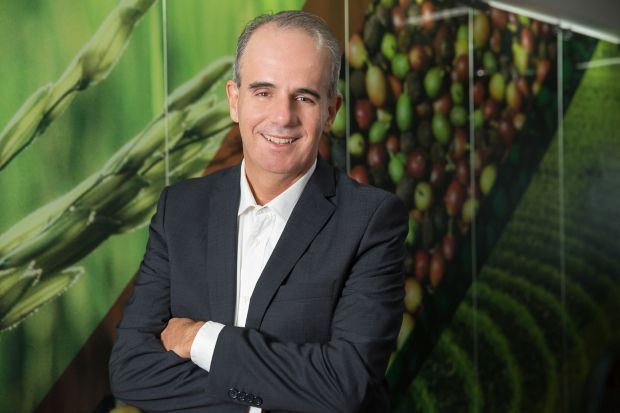 Eduardo de Souza Monteiro,Chairman of the Board of ANDA (National Association for Fertilizer Dissemination)
Published on September 3rd /2025
Agriconscient Show – Broadcast by Radio Eldorado / Estadão – Brasil
*José Luiz Tejon
Translated / Copydesk by Teacher Francisco Barbosa Bardhal
I spoke with Mr. Eduardo de Souza Monteiro, Chairman of the Board of ANDA (National Association for Fertilizer Dissemination) during the 12th Brazilian Fertilizer Congress, which a thousand executives and leaders attended at an event held in the World Trade Center (WTC Events) in São Paulo.
Mr.Eduardo presented a pertinent summary of the main topics discussed at this highly important congress, where fertilizers and Agribusiness are completely interconnected.
He, who's also the country manager of Mosaic Fertilizers, told me:
"Today, we’re debating central topics for the future of Brazilian Agriculture, among which I always highlight Supply Security and the importance of predictability for the rural producer. We discussed Sustainability, Nutrients for Life, the role of biological inputs, and a fantastic study from Embrapa in partnership with the Ministry of Agriculture (Mapa), which discusses the potential growth of arable land in Brazil by converting pastureland into farmland."
We also discussed the integration of crop, livestock, and forestry systems (ILPF), the associated challenges, and the credit risk affecting two fronts.
At first, let´s consider the issue that all goods have already been sold to distribution channels, retailers, cooperatives, and grain merchants, who are requesting additional guarantees to release the goods, delaying industry shipments.
In July and August, for instance, this situation led to a considerable concentration risk for the sector ahead of September.
Additionally, we’re observing changes in the allocation of accounting criteria and provisions for doubtful accounts by financial institutions, whose requirements become stricter when releasing new lines of credit. Consequently, the slower pace of credit releases and the reduction in limits have caused the remaining demand, approximately 20%, to be questioned,” – he commented.
From the summary and Mr. Eduardo's statements, we can infer that we should not expect a new record harvest. The quantity of fertilizers supplied is expected to match the 24/25 harvest. There is also a concern regarding approximately 10% of fertilizers that have not been commercialized, and we’re already planting the new crop. Delays due to financial issues and credit security will bring logistical complications.
However, during this Congress, we heard about excellent government plans for fertilisers aimed at reducing our dependence on imports to meet the projected growth of Brazilian harvests over the next 10 years, as stated by Mr. José Carlos Polidoro, advisor to the Minister of Agriculture, regarding the "Green Path" plan.
In the same way, Mr. Guilherme Campos, Executive Secretary of Mapa (Brazilian Ministry of Agriculture and Livestock), representing Minister Mr. Carlos Fávaro, emphasised state agricultural policies focused on programmes to replace fertiliser imports.
The Brazilian Vice President, Mr. Geraldo Alckmin, sent a message highlighting all the government's ongoing programmes aimed at achieving greater national self-sufficiency in fertilisers.
On his turn, Mr. Francisco Maturro showcased the ongoing transition to regenerative Agriculture through the ILPF – Integration of Crop, Livestock, and Forestry - which has already reached approximately 20 million hectares in the country.
Mr. Roberto Rodrigues, Emeritus Professor at FGV(Brazilian Higher Education Institution, founded in 1944), Brazilian representative appointed for Agriculture at COP-30, revealed the start of a deep study between FGV and other institutions aimed at generating a strategic plan for the Brazilian state.
This plan will cover everything we need to do to meet global food demands — from A for Avocado to Z for Zebu — as well as the involvement of the country's agricultural attachés worldwide, including the FAO.
This means we´ll create a legitimate Brazilian Agribusiness Strategy, namely "Agro 50, by 2050."
The NPVs, Nutrients for Life, were also highlighted at this Congress.
The programme coordinator, Mr. Walter Cazarin, stated:
“We’re not merely producers and sellers of fertilizers. We produce and sell health, because when soil is sustained and plants are well cared for, the value of the food we consume increases. In this sense, fertilizers are nutrients for the life of the planet and, especially, for human beings,” - He said.
The Brazilian Fertiliser Congress proved to be a positive event, showcasing strong public-private convergence, where soil and plant Science resonates powerfully within Brazil’s environmental and our Agritropical landscape.
Congratulations, Agrimakers!
*Prof.Dr.José Luiz Tejon - PhD in Education Universidad de La Empresa/Uruguay; Academic Director Brazil+Tropical Belt Nations at International Agribusiness MBA Audencia France & Fecap Brazil; Master's degree in Art Education and History of Culture - Mackenzie University; Journalist and Publicist - Harvard, MIT and PACE/USA/ Insead in France; Specialization Academic Coordinator of Master's Science Food & Agribusiness Management at Audencia in Nantes/ France, and FECAP/Brazil; Managing Partner at Biomarketing and TCA International; Professional Head at Agri Anefac; Writer, author and co-author of 37 books; Agri Personality Award 2023/ABAG -100 Most Influential People in Agribusiness; Former director of Grupo Estadão, Agroceres and Jacto S/A; 2025 Award Agriworld Group.