Rádio Eldorado/Estadão - FAO and Embrapa to Establish International Center for Tropical Agriculture
Publicado em 11/12/2025
Divulgação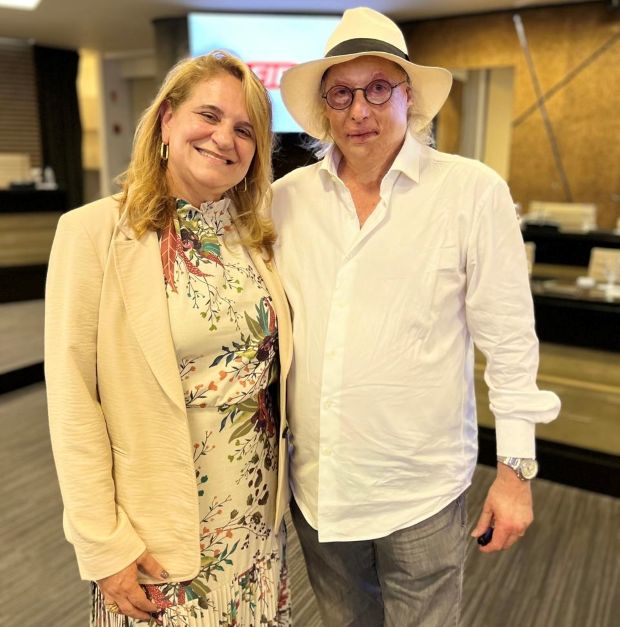 Tejon and Silvia Massruhá, Embrapa president
Published December 12, 2025
Agriconscient Show – Rádio Eldorado Estadão – Brazil
By José Luiz Tejon
Translated/Copyedited by Teacher Francisco Barbosa Bardhal
In an interview with Agriconscient Show, Embrapa president Silvia Massruhá highlighted the strong international response to Agrizone, Embrapa’s dedicated agricultural pavilion at COP30, which drew widespread attention to Brazil’s advances in tropical agriculture, many of which are still unfamiliar to global audiences.
Ms Massruhá reported that more than 40 negotiators from various countries visited the space and told me:
“We finally showed ourselves to the world. Many of them reacted, exclaiming, “My God, now we understand what Tropical Agriculture really is. And they began to understand what it means to harvest one, two, or even three crops a year. Practices such as crop–livestock integration, routine for us, are far from common in temperate regions,” she cleared me.
A Center for Tropical and Agroforestry Agriculture
A major outcome now emerging from COP30 discussions is the proposal to create an International Center for Tropical and Agroforestry Agriculture, a joint initiative between Embrapa and the United Nations Food and Agriculture Organization (FAO). This center would serve as a global hub to support development across the Tropical Belt, a region frequently highlighted on our Agriconscient Show, broadcast by Radio Eldorado/Estadao.
Brazil’s own transformation illustrates the potential impact. In just four decades, the country has expanded grain production from 58 million to 350 million tons, becoming a world leader in animal protein, bioenergy, and fibres, and a cornerstone of global food security. Projections indicate that Brazil could double its agricultural output within the next 12 years.
According to Ms Massruhá, this scientific, technological, and educational model, strengthened by cooperatives and highly trained professionals, is fully replicable across tropical biomes worldwide. She notes that such replication may be essential for tackling global challenges, including inequality, climate change, and food and energy security.
Discussions between FAO and Embrapa are already underway. Former minister Roberto Rodrigues, Brazil’s agricultural envoy at COP30, has been a key advocate for the partnership, which he and other historic leaders of Brazilian agribusiness view as a long-standing national ambition.
The initiative, if implemented, would bolster Brazil’s global standing and reinforce its leadership in Tropical Agricultural Innovation.
Congratulations to Embrapa, FAO, and Brazil’s dedicated Agrileaders.
*Prof.Dr.José Luiz Tejon - PhD in Education Universidad de La Empresa/Uruguay; Academic Director Brazil+Tropical Belt Nations at International Agribusiness MBA Audencia France & Fecap Brazil; Master's degree in Art Education and History of Culture - Mackenzie University; Journalist and Publicist - Harvard, MIT and PACE/USA/ Insead in France; Specialization Academic Coordinator of Master's Science Food & Agribusiness Management at Audencia in Nantes/ France, and FECAP/Brazil; Managing Partner at Biomarketing and TCA International; Professional Head at Agri Anefac; Writer, author and co-author of 37 books; Agri Personality Award 2023/ABAG -100 Most Influential People in Agribusiness; Former director of Grupo Estadão, Agroceres and Jacto S/A; 2025 Award Agriworld Group.