Rádio Eldorado/Estadão - United Tropical Countries in Agricultural Research: Tropiculture
Publicado em 27/11/2025
Divulgação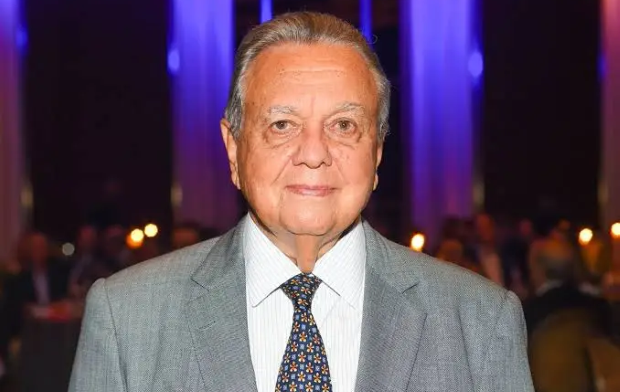 Dr Roberto Rodrigues, former Brazilian Minister of Agriculture
Published on November 26, 2025
Agriconscient Show — Broadcast by Rádio Eldorado Estadão — Brazil
*José Luiz Tejon
Translation / Copydesk by Teacher Francisco Bardhal Barbosa
At COP30, Dr Roberto Rodrigues, former Minister of Agriculture, met with leaders from countries located in the planet’s Tropical Belt — the region between the Tropics of Cancer and Capricorn, including subtropical areas — to discuss creating a technology and research exchange among these nations.
He also spoke with Ms Sílvia Massruhá, president of Embrapa (Brazilian Agricultural Research Corporation), recalling the creation of the Cairns Group in 1986, which sought to liberalize global agricultural trade and reduce protectionist barriers, such as the European Union’s Common Agricultural Policy.
Brazil and other tropical countries need strong cooperation in science and technology tailored to tropical conditions. As the late Alysson Paolinelli often stated: “In every Brazilian biome, there are dozens of scientific discoveries yet to be made to ensure agricultural and livestock security.”
The Importance of the Tropical Belt — in Dr Rodrigues’ Words: “During COP30, on a certain day, I was invited to meet with the Australian delegation. They offered high praise for Brazil’s work in Tropical Science and Technology and said they would like to learn more. So I made them a proposal: Do you remember that about 25 years ago, there was the Cairns Group ( named after Cairns city in Australia ), which was a major agreement among agricultural-exporting countries aimed at civilizing or reducing the protectionism of developed nations? It worked very well! Later on, when I was Minister of Agriculture, we even created the G20 for agriculture and took part regularly in the Cairns Group.
Now, speaking with the Australians, I suggested launching a Technological Tropical Research Group — bringing together agronomic, veterinary, animal science, and forestry research institutions. Essentially, everything related to agribusiness along tropical countries. This group would include Brazil, Australia, New Zealand, China, Argentina, and other Latin American nations, including Mexico. This research group would promote an exchange of tropical expertise among countries across the Global South.
They liked the idea very much and said they would discuss it further.
Shortly afterward, I met Embrapa president Ms. Sílvia Massruhá and shared the same idea. She was very enthusiastic and said she would think over it and help to refine the proposal. Who knows, we might soon create a network of Tropical Agricultural Research and technology institutions, enabling us to exchange scientists, studies, interns, and students. This would continually expand the technological knowledge available to countries in the Southern Hemisphere,” concluded Dr. Rodrigues.
“Tropiculture”: A Vision for the Future
Tropiculture, a term coined by the Brazilian economist Paulo Rabello de Castro, may represent COP30’s most extraordinary contribution to Brazil, to tropical nations, and to global food, energy, environmental, climate, and social security, combined with Dr Roberto Rodrigues's initiative for a Technological Tropical Research Group.
It will certainly have a positive impact on the economies and incomes of all participating countries.
Congratulations, Dr Roberto Rodrigues, FGV (High Business College) Emeritus Professor. An extraordinary vision and call to action!
A warm tropical hug!
*Prof.Dr.José Luiz Tejon - PhD in Education Universidad de La Empresa/Uruguay; Academic Director Brazil+Tropical Belt Nations at International Agribusiness MBA Audencia France & Fecap Brazil; Master's degree in Art Education and History of Culture - Mackenzie University; Journalist and Publicist - Harvard, MIT and PACE/USA/ Insead in France; Specialization Academic Coordinator of Master's Science Food & Agribusiness Management at Audencia in Nantes/ France, and FECAP/Brazil; Managing Partner at Biomarketing and TCA International; Professional Head at Agri Anefac; Writer, author and co-author of 37 books; Agri Personality Award 2023/ABAG -100 Most Influential People in Agribusiness; Former director of Grupo Estadão, Agroceres and Jacto S/A; 2025 Award Agriworld Group