Brazil's Green Seal is already in the Official Gazette of the Union
Publicado em 27/06/2024
Divulgação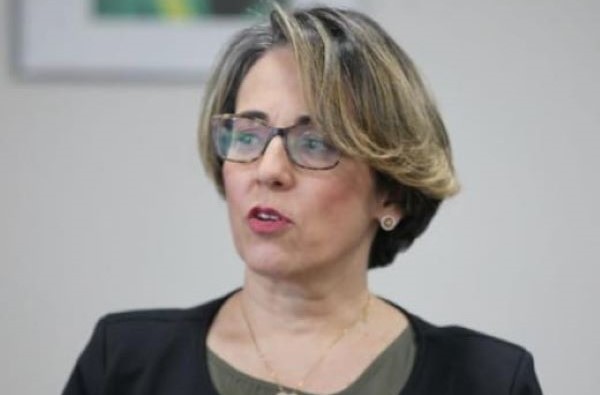 Fabiana Villa Alves, advisor to the Green Economy Secretariat
Great action by MDIC in partnership with ABDI and Sebrae, Brazil
Published on 06/21/2024 By * Prof. Doctor José Luiz Tejon
Under the initiative of the Minister of Development, Industry, Commerce, and Services (MDIC), the vice-president, Mr. Geraldo Alckmin, and the Secretary of Green Economy, Decarbonisation and Bioindustry, Mr. Rodrigo Rollemberg, we will now move towards a level of value addition competing world markets, with a commitment from the Brazilian state, ensuring principles of sustainability.
We interviewed Dr.Fabiana Villa Alves, Advisor to the Secretariat of Green Economy, Decarbonisation and Bioindustry of the MDIC(Ministry of Development, Industry and Commerce) who told us: “The green seal is a great initiative Brazil is taking forward. This week, a decree was released where the guidelines for this Environmental are determined were the Green Label is, in fact, an important conformity assessment for our industrialised products”.
So, all these products will be endorsed by a third-party certification agency, under an audited credible endorsement process, in order they have international recognition. It means we´ll have a certification, a seal which attests socio-environmental criteria that will also depend on the type of product or production chain.
So, the idea is, by the end of June, we´ll have consultative and managerial committees formed from various institutions, ministries, and representatives of the productive sector who will actively participate in defining these criteria. In this way, the first products to be certified are also defined. We can then pass the results on to ABNT – Brazilian Association of Technical Standards, who´s responsible for the execution and composition of certification standards and standards.
Inmetro ( National Institute of Metrology, Standardization, and Industrial Quality rules), in its turn, will register the certifying companies that can provide this service to industries and companies.
The idea of the Green Seal Environmental Label as a conformity assessment comes from the Brazilian Government, which follows the example of other countries such as Canada and South Korea, which already have applied this important way of product labeling.
Therefore, the key objective is that we can add value to our products. We, Brazilians, have one of the most sustainable energy bases in the world, if not the most sustainable one.
We have several technological processes already working for decarbonising. We have a serious commitment to the Environment, not only when we talk about the industrial sector, but also along all primary production. A typical example of this, can be seeing over our agriculture, which is based on sustainable production systems. So, all of this means that Brazil can have a seal that represents all this Added Value, an intangible value.
Furthermore, this Green Seal is something important to allow Brazilian Agribusiness to open markets for our industrialised products. The person who´s proposing this seal is the Ministry of Industry, Commerce and Services (MDIC), hand in hand with our Minister who´s, also, vice-president of the Republic, Mr. Geraldo Alckmin, and here, through the Green Economy Secretariat, commanded by our secretary Mr. Rodrigo Rollemberg”.
This initiative will involve production chains, with a very important positive impact on agribusiness. The Brazilian food and beverage industry, for example, is the largest exporter, in volume in the world and we need to add more value, allowing us to compete on supermarket shelves as well as Consumer tables and, thus, ensure a future that has already begun.
ABNT (Brazilian Association of Technical Standards) will be in charge of defining technical standards with all Socio-Environmental Sustainability Criteria.
ABDI - Brazilian Industrial Development Agency and Sebrae (Micro and Small Business Support Service), in their turn, will be the main partner agents for the dissemination of this important program.
I see great opportunities for geographic indication programs and designation of origin that have been worked on by Sebrae, alongside Senar (National Rural Learning Service) and Sescoop (National Cooperative Learning Service) for the valorisation of industrialised national “terroir” to the world.
Actions like this will certainly contribute to the growth of Brazilian agro-industrial GDP. This brilliant initiative is part of the Nova Indústria Brasil Plano ( New Brasilian Industrial Plan), and the standards will be published by the first half of 2025.
Biodiversity is fully linked in this context.
*José Luiz Tejon – PhD in Education-Universidad de La Empresa/Uruguay; Master's degree in Art Education and History of Culture - Mackenzie University; Journalist and Publicist - Harvard, MIT and PACE/USA / Insead in France; Specialisation Academic Coordinator of Master Science Food & Agribusiness Management at Audencia in Nantes/France and FECAP/ Brazil. Managing Partner at Biomarketing and TCA International. Professional Head at Agro Anefac. Writer author and co-author of 35 books. Agro Personality Award 2023. ABAG. Former director of Grupo Estadão, Agroceres and Jacto S/A.