Inside the farm gate, brazilian agribusiness is champion; Outside it, we falls to the second division
Publicado em 20/03/2026
Divulgação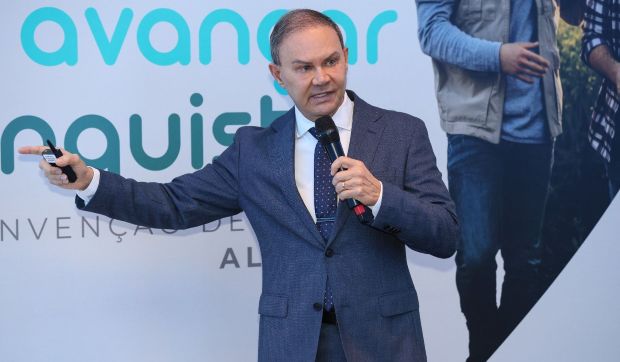 Carlos Cogo, from Cogo Strategic Consulting
Published on March 09, 2026
Agriconscient Show – Broadcast by Radio Eldorado Estadão, Brazil
*José Luiz Tejon
Translated/Copydesk by Teacher Francisco Barbosa Bardhal
Due to the rise of the U.S. dollar, driven by the war in the Middle East, concerns are growing since Brazilian agribusiness depends on 85% imported fertilizers. In addition, we still face the serious challenges of logistics and the movement of harvested crops.
We’re now in March, with harvesting underway and preparations already beginning for the next crop season. There are many risks involved, and this clearly shows that Brazilian agribusiness is a champion inside the farm gate, but outside the gate it falls to the second division.
There's too much to be done. I asked a major analyst whom I greatly admire, Mr. Carlos Cogo, from Cogo Strategic Consulting, to share his opinion, especially regarding fertilizers and what farmers should do at this moment of risk. He told me: “It's always important to reinforce a central point for Brazilian agribusiness: anticipating fertilizer purchases is a strategic risk-management decision.
Brazil imports 85% of the fertilizers it consumes annually, which directly exposes the agricultural sector to fluctuations in the international market. This means that, beyond the risk of higher prices, there’s another risk that is often underestimated: supply shortages and logistical limitations for importing, distributing domestically, and applying these inputs at the correct time.
The process of purchasing and using fertilizers involves a long logistical cycle, starting with production abroad, shipment, maritime transport, unloading at Brazilian ports, domestic distribution, and finally application in the fields. Therefore, when a geopolitical shock or disruption in global trade occurs, the impact on supply can be immediate.
We saw exactly this during the Covid-19 pandemic and later during the war between Russia and Ukraine, when international fertilizer prices rose sharply, particularly for nitrogen and potash products. At that time, some producers chose to reduce the volumes purchased.
In fact, that year we saw a drop of about 5 million tons in fertilizer sales. Others postponed purchases and temporarily adjusted the nutritional management of their crops and fields. However, this reduction proved to be only temporary, since in the following crop season demand was restored through increased application levels.
The reason is simple: imported nutrients must be replenished in order to maintain the productive potential of soils. This leads directly to a strategic risk management decision. Another important point is that Brazil still faces structural limitations in achieving fertilizer self-sufficiency, due to insufficient domestic production, especially referring to potash and nitrogen fertilizers.
Factors such as geological availability, industrial costs, energy, and logistics make a rapid expansion of domestic supply difficult. In my view, self-sufficiency is still a very distant goal for Brazil.
Therefore, exposure to external shocks remains a structural characteristic of the sector. There is still time to secure supply for the 2026/27 crop season. Anticipating purchasing strategies is not merely a commercial decision, it’s a way to protect crop productivity and ultimately the producer’s profitability.”
Very well. I thank Mr. Carlos Cogo, and his view is clear: farmers should seek security in supply. It is striking how exposed we are to external shocks. I believe that Brazilian agribusiness must now adopt an effective national strategy to correct all the structural challenges that exist outside the farm gate. Otherwise, we may reach a point where further growth becomes impossible.
Commodity prices may also rise, particularly soybeans and corn, since they tend to follow the evolution of oil prices. So, in the end, it all comes down to management, management, management. And making an analogy with Brazilian soccer, Id say: “We are champions inside the farm gate, but outside we fall into the second division.”
*José Luiz Tejon – PhD in Education from the Universidad de La Empresa/Uruguay, Master's degree in Education, Art and History of Culture from Mackenzie University, Journalist and advertising professional with specializations from Harvard, MIT, PACE/USA, and INSEAD in France. Columnist for Rádio Eldorado and Estadão On-line, and the author and co-author of 37 books. Academic Coordinator of the Master Science Food & Agribusiness Management program at Audencia in Nantes/France and FECAP/Brazil.Managing Partner at Biomarketing and TCA International. Vice-President of the Brazilian Marketing Foundation (FBM) and ADVB - the Brazilian Marketing Foundation and Association of Sales and Marketing Executives of Brazil. Head of Agro at ANEFAC. ABAG 2023 Agro Personality Award. Former director of Grupo Estadão, Agroceres, and Jacto S/A.