Biogas enables french farmers to double their revenues
Publicado em 26/02/2026
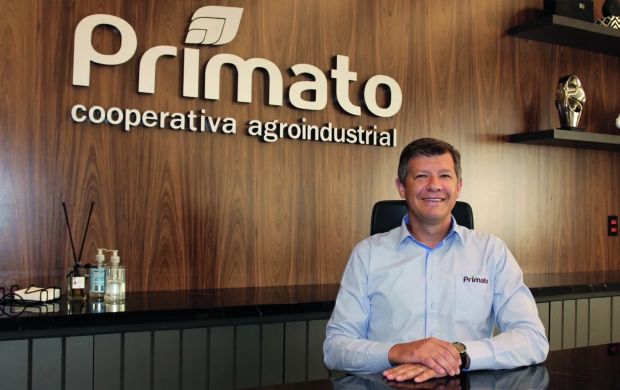 Mr. Anderson Sabadin, President of Primato
Published on February 18, 2026
Agriconscient Show
Broadcast by Radio Eldorado Estadão – Brazil
José Luiz Tejon
Translated / Copydesk by Teacher Francisco Barbosa Bardhal
Bonjour Brasil! Reporting from France at the Agrotropical Seminars held at Audencia Business School, one of the highlights that captured our attention was the presentation on the development of what is known here in France as “Methanization.”
Biodigesters producing biogas and, through this technology, generating biofertilizers, bioelectricity, and biomethane , are creating an opportunity for farmers to double their revenues.
In addition to producing food, they are becoming energy suppliers by transforming organic waste into valuable resources.
French cooperatives are encouraged to convert all organic waste into biogas, which is then injected into the national energy grid. Amid Europe’s current energy insecurity, largely driven by the Russia-Ukraine war, Biomethanization , as this system is called, is enabling farmers to significantly increase their income.
In Brazil, rural biogas movement is also showing strong progress, as demonstrated by the Primato Cooperative in the city of Toledo, in western Paraná state. In partnership with Tupy MWM, through its decarbonization unit, Primato has developed bioplants using swine waste from its cooperative members.
This initiative produces biofertilizers and biomethane to fuel the cooperative’s entire mobility fleet. In my conversation with Mr. Anderson Sabadin, President of Primato, he emphasized that they plan to build many more bioplants, as this represents , just as has been confirmed here in France, a new revenue stream for cooperative members, in addition to advancing decarbonization efforts and also preparing for entry into the Carbon Market, including the commercialization of biofertilizers.
Another topic widely discussed here in Europe is China’s growing presence in Africa, producing African goods that are now landing on French supermarket shelves. More than ever, Europe needs the European Union–Mercosur trade agreement.
A surprising development in the French agricultural environment is the rise in crime and insecurity in rural areas.
Large-scale criminal activity has been affecting farms and farmers demonstrating that illegality isn't an issue exclusive to Brazil. Meanwhile, news from Brazil highlights the Rio de Janeiro Carnival, which has reportedly generated economic activity reaching approximately 1.5 billion euros.
The joy of Brazilian Carnival now although it's end on so called "Ash Wednesday" must go on, "here there and everywhere"( Beatles) and, regarding the broader economic movement in France, the revitalization of French industry through decarbonization is a central theme. Sustainability will undoubtedly extend beyond national borders and beyond farm gates. It's an issue for society as a whole.
Agriconscient Show, reporting directly from France.
À bientôt!
*Prof.Dr.José Luiz Tejon - PhD in Education Universidad de La Empresa/Uruguay; Academic Director Brazil+Tropical Belt Nations at International Agribusiness MBA Audencia France & Fecap Brazil; Master's degree in Art Education and History of Culture - Mackenzie University; Journalist and Publicist - Harvard, MIT and PACE/USA/ Insead in France; Specialization Academic Coordinator of Master's Science Food & Agribusiness Management at Audencia in Nantes/ France, and FECAP/Brazil; Managing Partner at Biomarketing and TCA International; Professional Head at Agri Anefac; Writer, author and co-author of 37 books; Agri Personality Award 2023/ABAG -100 Most Influential People in Agribusiness; Former director of Grupo Estadão, Agroceres and Jacto S/A; 2025 Award Agriworld Group.