Europe, São Paulo’s Second-Largest Trading Partner: The Port of Rotterdam Is Extremely Important
Publicado em 29/01/2026
Divulgação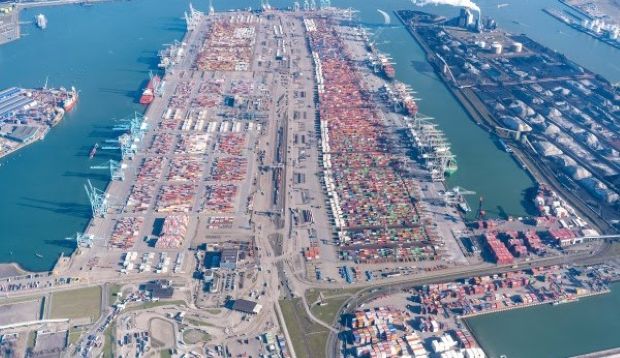 Port of Rotterdam, Netherlands
Published in January 2026
Agriconscient Show – Broadcast by Rádio Eldorado / Estadão – Brazil
José Luiz Tejon
Translated by Teacher Francisco Barbosa Bardhal
In 2025, the state of São Paulo exported US$ 4.14 billion to the European Union, representing 14.4% of the state’s total exports. São Paulo’s largest foreign market was China, accounting for 23.9% of the State exports, and projections for 2026 points to a growth above the 5% increase recorded last year. Coffee, meat, and fruits were the main products exported.
Within Europe, the Netherlands stands out due to its magnificent Port of Rotterdam, the largest logistics hub in Europe.
Through this port, São Paulo shipped more than one million tons of agricultural products, including juices, pulp, and goods from the sugar and ethanol complex.
Among these products, special mention goes to the tropical fruit persimmon (Caqui), exported by the APPC Agroindustrial Cooperative from Pilar do Sul , the Cooperative of the Association of São Paulo Persimmon Producers.
These fruits are considered among the most flavorful in the world. The Fuyu and Rama Forte, persimmons species, highly sought after in Europe, are redistributed from the Netherlands through the extraordinary Rotterdam distribution hub, which also receives other fruits produced in th The e state of São Paulo.
São Paulo State Secretariat of Agriculture and Supply maintains a partnership with the Consulate of the Netherlands, focusing on technical cooperation and the exchange of technologies.
The Secretary of Agriculture, Mr. Geraldo de Melo Filho, adds that with the European Union–Mercosur Agreement, business prospects will become even more promising.
The Agricultural Counselor at the Embassy of the Netherlands, Ms. Inge Horstmeier, stated:
“The State of São Paulo is strategic because it produces a wide range of products with high standards of quality and sustainability, values that are essential both to the European Union and to the Netherlands.”
It’s interesting to observe the diversity of perspectives and the clarity of opportunities in agribusiness when listening to positive statements from representatives of Nordic countries, in this case, the Netherlands, one of the most advanced agribusiness centers on Earth, known for value addition and world-class logistics.
The Netherlands is also home to the university considered the most advanced and the world #1 in Agricultural Sciences: Wageningen University.
Therefore, just as we celebrate Pilar Moscato, Brazil’s first gourmet grape, we also celebrate our Persimmon( Caqui)
Excellent trade opportunities arise for both tropical and European terroirs. A horizon of quality, technological exchange, and friendship lies ahead.
*Prof.Dr.José Luiz Tejon - PhD in Education Universidad de La Empresa/Uruguay; Academic Director Brazil+Tropical Belt Nations at International Agribusiness MBA Audencia France & Fecap Brazil; Master's degree in Art Education and History of Culture - Mackenzie University; Journalist and Publicist - Harvard, MIT and PACE/USA/ Insead in France; Specialization Academic Coordinator of Master's Science Food & Agribusiness Management at Audencia in Nantes/ France, and FECAP/Brazil; Managing Partner at Biomarketing and TCA International; Professional Head at Agri Anefac; Writer, author and co-author of 37 books; Agri Personality Award 2023/ABAG -100 Most Influential People in Agribusiness; Former director of Grupo Estadão, Agroceres and Jacto S/A; 2025 Award Agriworld Group.