From 1970 to 2026: 30 Ministers of Agriculture in 56 years
Publicado em 08/10/2026
ABAG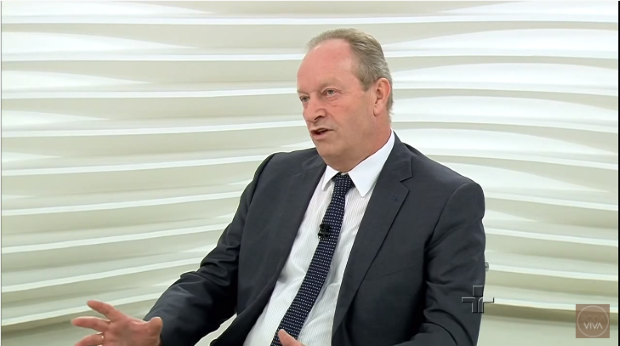 Mr.Ingo Plöger ABAG's President
Published on October 05, 2026
Agriconscient Blog
*José Luiz Tejon
Translated / Copydesk by Teacher Francisco Barbosa Bardhal
Brazilian Agribusiness Association (ABAG), through its President Mr. Ingo Plöger, issued a manifesto calling on organized civil society to gather a comprehensive State Plan. With no doubt, we need a long-term plan to achieve the breakthrough that will allow Brazil’s modern Tropical Agribusiness to double in the coming years.
We need an urgent plan to accomplish 40 years of progress in 4 meaning under the incoming administration, regardless of who's being elected president, a Long-Term State Plan must be considered as a matter of urgency.
At the recent GAFFFF (Global Agribusiness Forum), a panel on the WAWL (World Agribusiness Women Leadership) stage addressed this precise need: Implementing a practical roadmap tailored directly for rapid execution.
Critical Priorities for Agribusiness Policies
Biological inputs urgently require regulation. For instance, regarding fertilizers, Brazil remains 90% dependent on imports and, without fertilizer security, food security simply cannot exist.
Furthermore, Brazilian logistics continue relying heavily on fossil fuels, while the regulatory approval of crop protection molecules and biotechnology faces chronic delays.
Moving far beyond silos and warehouses, agrindustrial processing is imperative if we're to compete directly on retail shelves and at consumer tables worldwide.
We also face urgent needs regarding Rural Insurance policies, Irrigation Infrastructure, Legal Certainty, and access to modern Digital Tools, such as Artificial Intelligence, Satellite connectivity, alongside targeted investments to showcase Brand Brazil’s incomparable tropical and environmental origins.
In summary, Brazilian farmers must be protected through long-term planning against volatile cycles and uncontrollable risks inherent to agriculture, an industry that shouldn’t be managed under determined Short-Terms planning.
A Strategic State Plan must establish clear, quantifiable metrics. For instance, it must answer one fundamental question: What's the target value for the total economic output across all agricultural value chains by the end of the presidential term? Today, our agrisector generates roughly $600 billion. Will we reach the $1 trillion milestone, Mr. President?
Over the last 56 years, spanning from 1970 to 2026, Brazil has experienced every style of government. During this period, 30 different Ministers of Agriculture have served, the overwhelming majority of whom were highly competent and respected leaders, including figures such as Cirne Lima, Alysson Paolinelli, Delfim Netto, Blairo Maggi, Pratini de Moraes, Antônio Cabrera, and Francisco Turra, among many other notables.
The caliber of MAPA (Ministry of Agriculture, Livestock, and Supply) ministers has historically surpassed the average standing of their respective presidential administrations.
Looking ahead to the next administration, we hope to see a Minister of Agriculture possessing the stature and expertise of Ms. Tereza Cristina (who served under the president Bolsonaro administration) or Mr. Roberto Rodrigues (who served during President Lula’s first term). Should that occur, and should we pay extra attention to ABAG’s manifesto by assembling a corps of ethical and highly capable professionals to bridge the public and private sectors around a Strategic State Plan, the next administration will undoubtedly achieve a considerable success.
We no longer have another 56 years to wait for progress without a Long-Term Strategic Plan. We must take immediate action, setting aside division and political polarization conflicts and counterproductive disputes.
No more waste of time. Forward, Brazil!
*José Luiz Tejon is PhD in Education from Universidad de La Empresa/ Uruguay. Master’s degree in Education, Art and Cultural History from Mackenzie Presbyterian University. Journalist and advertising professional, with specialization programs completed at Harvard University, Massachusetts Institute of Technology, PACE University, and INSEAD. Columnist for several Brazilian radio networks, television programs, newspapers, magazines, and social media platforms, as well as the author and co-author of 37 books. Academic Coordinator of the Master of Science in Food & Agribusiness Management, program offered by Audencia Business School in partnership with FECAP Brazil, and other educational entities. Managing Partner of Biomarketing and TCA International. Vice president of the Fundação Brasileira de Marketing (FBM) and Associação dos Dirigentes de Vendas e Marketing do Brasil (ADVB). Head Agro Professional at ANEFAC and received the Personalidade Agro ABAG 2023 award. Previously,served as Director of the Grupo Estadão, Agroceres, and Jacto S/A.