InpEV Drives the World’s Leading Environmental Initiative
Publicado em 13/11/2025
TCAI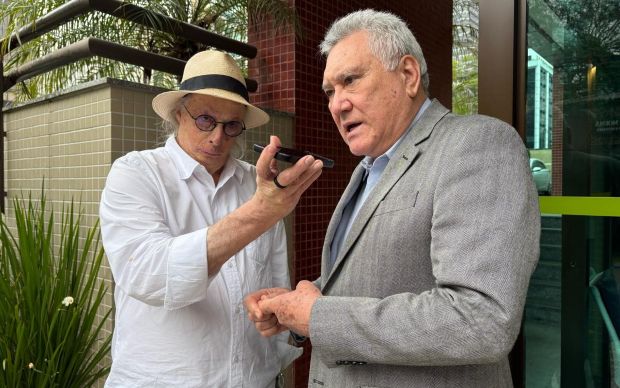 Marcelo Okamura, President of inpEV
Published on October 31, 2025
Agriconscient Show - Broadcast by Radio Eldorado/Estadão - Brazil
*José Luiz Tejon
Translated by Teacher Francisco Barbosa Bardhal
I spoke with Marcelo Okamura, president of inpEV (the National Institute for Empty Packaging Processing), an extraordinary organization that, for over 24 years, has been promoting the collection and recycling of all empty agricultural pesticide packaging in our country.
It is a unique example in the world, and I asked Mr Okamura about the benefits of this initiative for Agribusiness and for all of Brazilian society. He replied:
"It is a pleasure to talk about the sustainability of agribusiness. inpEV manages the reverse logistics and final destination of empty agricultural pesticide packaging.
I´m used saying that inpEV is the ESG of agriculture because it generates social benefits by creating jobs and income across all states in the federation through its reverse logistics operations.
It also provides environmental benefits because all the packaging we remove from the fields, which would otherwise be waste, is transformed into raw material for other production chains, whether for new agricultural pesticide containers or for drainage and electrical pipes.
Approximately 38 different products can be remanufactured from this post-consumer resin.
For every package we transform into a new one, we prevent the emission of 1.49 kilograms of CO2 into the atmosphere. This number, multiplied by the more than 150 million packages we have already processed through the Sistema Campo Limpo (Clean Field System), gives an idea of how the environmental impact of this work is highly positive
Furthermore, we also play a social role because, in addition to generating employment and income, we promote education in all the areas where we collect agricultural pesticide packaging.
Besides, we run our Environmental Education Program, which has already reached over 3 million children, teaching them the benefits of recycling and selective waste collection.
So, as I often say, this is ESG in practice, in agriculture," he commented.
This represents a Circular Economy, Environmental Care, and ESG in action, as Marcelo Okamura mentions. Congratulations, inpEV, on this important work.
We need this example to be replicated across all other Brazilian production chains.
*Prof.Dr.José Luiz Tejon - PhD in Education Universidad de La Empresa/Uruguay; Academic Director Brazil+Tropical Belt Nations at International Agribusiness MBA Audencia France & Fecap Brazil; Master's degree in Art Education and History of Culture - Mackenzie University; Journalist and Publicist - Harvard, MIT and PACE/USA/ Insead in France; Specialization Academic Coordinator of Master's Science Food & Agribusiness Management at Audencia in Nantes/ France, and FECAP/Brazil; Managing Partner at Biomarketing and TCA International; Professional Head at Agri Anefac; Writer, author and co-author of 37 books; Agri Personality Award 2023/ABAG -100 Most Influential People in Agribusiness; Former director of Grupo Estadão, Agroceres and Jacto S/A; 2025 Award Agriworld Group.