For Brazilian Agribusiness, it will be necessary to combine Advertising and Publicity.
Publicado em 10/09/2026
TCAI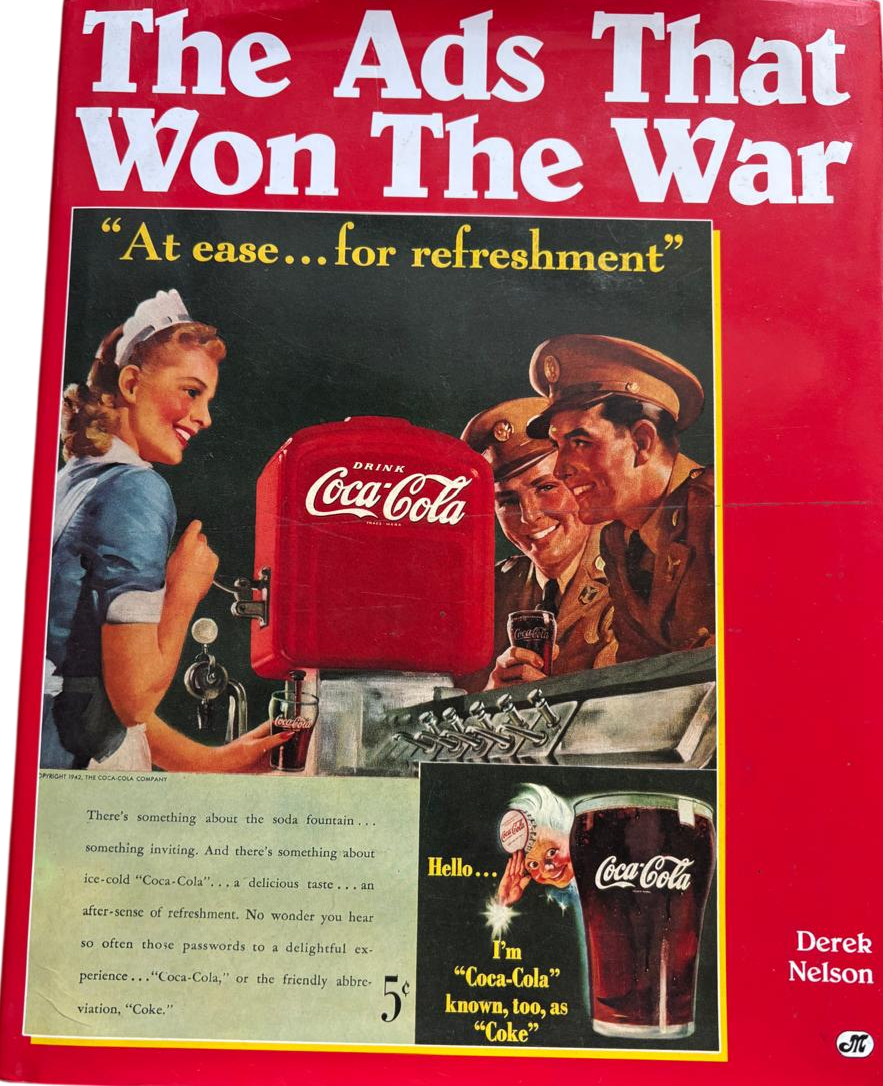 Advertising stands for making something public; Propaganda comes from plants propagation.
Published on August 31, 2026
Agriconscient Blog
www.tejon.com.br
* José Luiz Tejon
Translated/Copydesk by Teacher Francisco Barbosa Bardhal
Advertising comes from the concept of making something public. Propaganda comes from the term propagation. This word origin lies in agriculture itself , from the technique of planting seedlings or shoots, much like pruning and cultivating vinyards, how to make plants grow, that means to propagate. Therefore, nothing could be simpler or more obvious than connecting Propaganda with Agriculture or, in other words, the Advertiser with the Farmer.
Propaganda focuses on spreading concepts, beliefs, and values. It was formally established in 1622 by Pope Gregory XV who created the "Congregatio de Propaganda Fide." This commission of Cardinals was called Propaganda, and its purpose was to propagate the Catholic faith. Therefore, given the challenges of building perceived awareness around a true global tropical agro-technological revolution, developed in Brazil over the last 50 years, we need both: a convergence of Advertising and Propaganda.
In modern usage, Advertising is employed to sell products and services, while Propaganda focuses on values, concepts, politics, and ideas. In 20th-century wars, the use of Propaganda was decisive and significant, as analyzed in Derek Nelson’s book, Ads That Won the War.
Similarly, in Mein Kampf, Hitler emphasized Germany lost World War I due to Allied Propaganda. This explains his obsession with controlled Propaganda led by his strategist Goebbels, who even utilized what was then a highly innovative medium: the telegram.
Brands connecting consumers through values and lifestyles.
Today, the art of advertising runs hand in hand with Propaganda because brands now connect consumers through values and lifestyles. In agribusiness, ESG movements grant legitimacy to the origination of food, fiber, energy, and environmental stewardship.
Therefore, the lack of, or any slackening in managing Advertising and Propaganda strategies for Brazilian agribusiness, aimed at both Brazilian society and international consuming societies (Brazil’s clients), is totally unjustifiable. On the contrary, it becomes a critical success factor moving forward.
Agri-food system can bring everyone together
Prof. Dr. Ray Goldberg (in memoriam), creator of the agribusiness concept at Harvard, once told me:
“We need to stop dividing the world. Politicians polarize the world, and the agri-food system is the only one that can bring everyone together in an agro-citizenship, under a single planetary health system.”
In this wisdom concept, Brazil’s environmental tropical origination needs to be presented to the world so that it becomes "public", and not just known to a few. This reality calls for Propaganda strategies to shift perceptions. When left to misinformation and fake news, skewed perceptions delay Brazilian growth, create irrational barriers, and harm the entire world.
Tropical agribusiness propaganda must win hearts and minds and it requires creative talent and strong empathy with global citizens. To accomplish this mission, we must break filters and overcome perceptual barriers impregnated in populations.
This means it isn't enough to simply make things public; we must swiftly and empathetically win over the perception we're a nation that has welcomed peoples from all over the world. Here we united, married, and blended. Here, we're all immigrants.
It was from these peoples, who adapted to the tropics and amalgamated, we built an extraordinary level of food and energy security for the entire world. And we have much left to do moving forward, not only for Brazil, but for everyone: the Amazon, the Pantanal, the Caatinga, the Pampas, the Atlantic Forest, holding hundreds of microbiomes in every biome.
Home to the world's largest freshwater reserve, Brazil holds immense potential for irrigation governance and integrated crop-livestock-forestry systems, both of which will become increasingly sacred in the face of climate change.
Brand Brazil: Nature, People, Tourism, and Agriculture
In a survey conducted across 26 countries and 27 states, Brand Brazil emerges with a perception linked to Nature, People, Tourism, and Agriculture. This synthesis will be vital for a strategic plan for the Brazilian nation’s future: blending these four ingredients while preserving each one.
To make this happen, we must immediately leverage Advertising and Propaganda alongside Brazil’s exceptional advertisers, instilling global recognition for the extraordinary work we already do for the world's greater good, and changing it for the better.
Using Soccer as a metaphor, I'd say: "Without Propaganda and Advertising, we play extremely well. But nobody’s in our corner".
*José Luiz Tejon is PhD in Education from Universidad de La Empresa/ Uruguay. Master’s degree in Education, Art and Cultural History from Mackenzie Presbyterian University. Journalist and advertising professional, with specialization programs completed at Harvard University, Massachusetts Institute of Technology, PACE University, and INSEAD.
Columnist for several Brazilian radio networks, television programs, newspapers, magazines, and social media platforms, as well as the author and co-author of 37 books. Academic Coordinator of the Master of Science in Food & Agribusiness Management program offered by Audencia Business School in partnership with FECAP. Managing Partner of Biomarketing and TCA International.Vice President of the Fundação Brasileira de Marketing (FBM) and Associação dos Dirigentes de Vendas e Marketing do Brasil (ADVB). Head Agro Professional at ANEFAC and received the Personalidade Agro ABAG 2023 award. Previously,served as Director of the Grupo Estadão, Agroceres, and Jacto S/A.